
NEWS
LATEST NEWS
- 01Stop Chasing Speed — Build a Better RC Habit
- 02AI Industry Podcast: What We Learned From 2026 Shanghai Low-Altitude Economy Expo
- 03Global market comparison between RC Car,RC Drone and RC Boat
- 04Shenzhen Drone Flight Area Control Rules | Full Guide
- 05Agricultural drone remote control | Professional Plant Protection Transmitter Guide
- 06Application of 2.4G Model Remote Controllers in the Low-Altitude Economy Sector
- 07How to calibrate drone RC controller | Full Step-by-Step Guide
- 08Drone RC Radio Controller: Ultimate Maintenance & Calibration Guide
- 09Is RC Hobby Shrinking? New User Growth & Pain Points Across Global RC Communities 2026
- 010When X9Pro version would be released based on X9S?

Address:3rd Floor,C1 Buliding,Xiangli Industry Park,Heping Haoye Road,Baoan District,Shenzhen,Guangdong,China.
Zip Code: 518103
Phone: +86 13410681808
E-mail:sale@radiocontrollers.com
NEWS
HOMENEWS
Signal Interference Troubleshooting for RC Radio Remotes: Common Fixes for Drone & RC Model Pilots
2026-08-31 16:05:09 View:36Every RC pilot has encountered terrifying mid-air or on-ground issues: sudden signal jitter, unresponsive controls, short-range dropout, or even failsafe trigger for no obvious reason. Most beginners blame their RC radio remotes or model hardware, while ignoring the biggest hidden killer — radio signal interference. In this RC Hobby Weekly Podcast, we break down the most common signal interference sources in 2026, explain how interference affects drones, RC cars and RC boats, and share actionable troubleshooting and fixes for all RC model pilots.
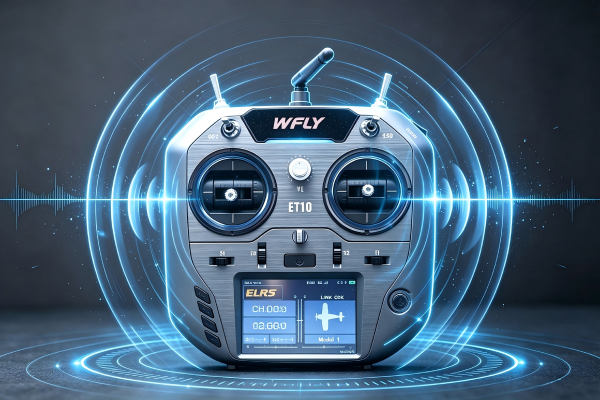
Whether you are flying RC drones, racing RC cars or navigating RC boats, 2.4G signal stability determines flight safety and operating experience. Mechanical failures are rare, but signal interference problems happen frequently in complex outdoor environments. Mastering interference troubleshooting skills is essential for every intermediate and advanced RC hobbyist.
Table of Contents
1. What Causes RC Radio Signal Interference
RC radio remotes mainly rely on 2.4GHz wireless transmission to connect receivers. Signal interference occurs when other wireless devices, metal obstacles or high-power electronic equipment occupy the same frequency band or generate electromagnetic radiation.
Interference sources are divided into two categories: external environmental interference and internal model hardware interference. Outdoor Wi-Fi towers, Bluetooth devices, high-voltage power lines and metal buildings can weaken remote signal transmission. Inside the model, EMC noise generated by motors, ESCs and unshielded wiring also disturbs receiver signal reception.
2. Common Symptoms of Signal Interference on RC Models
Random Stick Jitter
Your model shakes slightly without any stick input, which is the most typical sign of weak signal interference. It often happens on RC car steering and drone hovering attitude.
Shorter Control Range
Normal control distance drops sharply. The model loses signal within a short distance while your RC radio remote battery is fully charged.
Delayed Response
Throttle and steering commands have obvious lag, especially when the motor is running at high power.
Accidental Failsafe Trigger
Sudden failsafe activation during flight or racing, which easily causes crashes and model damage.
3. Environmental Interference & How To Avoid It
Urban Complex Scenarios
Crowded residential areas, shopping malls and stadiums are full of dense Wi-Fi signals and Bluetooth devices. These public wireless signals heavily squeeze 2.4G frequency bands. Try to choose open suburban fields, empty playgrounds or wide water surfaces for your drones and RC cars.
Metal & Obstacle Blocking
Metal fences, container stacks and metal buildings can completely block 2.4G signals. Never operate RC models behind large metal obstacles. For RC boats, metal ship hull accessories also cause local signal shielding, requiring reasonable receiver placement.
High-Voltage & Industrial Zones
High-voltage power lines, transformer stations and industrial equipment produce strong electromagnetic radiation. Avoid flying or driving models near these facilities to prevent severe signal interference.
4. Internal Hardware Interference Inside Your RC Setup
ESC & Motor Electromagnetic Noise
Brushless motors and ESCs generate high-frequency electromagnetic noise during operation. If the receiver is placed too close to the power system, signal jitter and loss will occur frequently.
Unshielded Wiring & Disordered Layout
Messy power lines crossing receiver antenna routes will cause continuous signal disturbance. Long unshielded power wires amplify electromagnetic interference.
Low-Quality Power Supply
Unstable LiPo voltage and cheap BEC modules cause current fluctuation, interfering with the normal operation of receivers and remote control modules.
5. 5 Quick Fixes for Instant Signal Stability Improvement
Adjust Receiver Position – Place the receiver far away from ESC, motor and power wires; keep the antenna vertical and exposed without metal covering.
Re-bind Radio & Receiver – Re-bind your RC radio remote and receiver before formal operation to eliminate frequency offset problems.
Add Magnetic Rings – Install ferrite magnetic rings on ESC power lines to suppress high-frequency noise interference.
Avoid Frequency Overcrowding – Stop operating when many RC players gather in a small area; stagger operation time to reduce 2.4G frequency congestion.
Check Battery Status – Replace aging transmitter and model batteries; low voltage is easily mistaken for signal interference failure.
6. ELRS VS Traditional 2.4G: Better Anti-Interference Solution
Traditional FHSS 2.4G protocols have limited anti-interference ability and are easily affected by dense urban wireless signals. In 2026, more professional RC pilots choose ELRS (ExpressLRS) systems.
ELRS features ultra-high refresh rate, adaptive frequency hopping and stronger anti-interference performance. It can automatically avoid crowded frequency points and maintain stable connection in complex environments. For long-distance flight, high-speed racing and open water navigation, ELRS-equipped RC radio remotes effectively solve most signal dropout problems that plague traditional radios.
7. Long-Term Habits to Prevent Signal Dropouts
Form a strict pre-operation signal check habit. Power on the transmitter first, then power on the model, and test full-range signal response before formal flight or racing. Regularly tidy the internal wiring of drones, RC cars and RC boats, avoid messy wiring crossing, and keep receiver antennas unobstructed.
Timely upgrade transmitter and receiver firmware. Official firmware updates usually optimize frequency adaptation and anti-interference algorithms, greatly improving long-term signal stability.
8. FAQ About RC Radio Signal Interference & Troubleshooting
Why does my RC model jitter only when the motor accelerates?
This is typical power system electromagnetic interference. The ESC generates strong high-frequency noise under high-load acceleration. Install ferrite rings and keep the receiver away from the power system to fix it.
Can weather cause RC signal interference?
Heavy fog, heavy rain and thunderstorm weather will attenuate 2.4G signals and increase electromagnetic interference. Avoid outdoor RC operation under extreme weather.
Is ELRS definitely better than traditional 2.4G radios?
Yes in complex scenarios. ELRS has stronger anti-interference, longer range and lower latency, which is more suitable for advanced players and complex environment operation.
Will multiple RC players playing at the same time cause signal interference?
Traditional 2.4G devices will have mutual interference when densely gathered. ELRS devices can effectively avoid frequency conflict through intelligent frequency hopping.
How to choose anti-interference RC radio remotes?
Choose professional RC radio remotes with mature protocols, upgradeable firmware and excellent EMC shielding, suitable for drones, RC cars and RC boats complex environment operation.
To sum up, most mysterious RC model failures are caused by signal interference rather than hardware damage. By identifying interference sources, optimizing internal wiring, choosing anti-interference radio protocols, and forming good pre-flight check habits, you can greatly reduce signal jitter, delay and dropout risks. Stable signal is the foundation of safe and enjoyable RC hobby experience.
rcradioremote.com provides high anti-interference RC radio remotes and receivers, supporting ELRS and traditional 2.4G protocols, perfectly matching RC drones, RC cars and RC boats for stable long-distance control.
Recommend